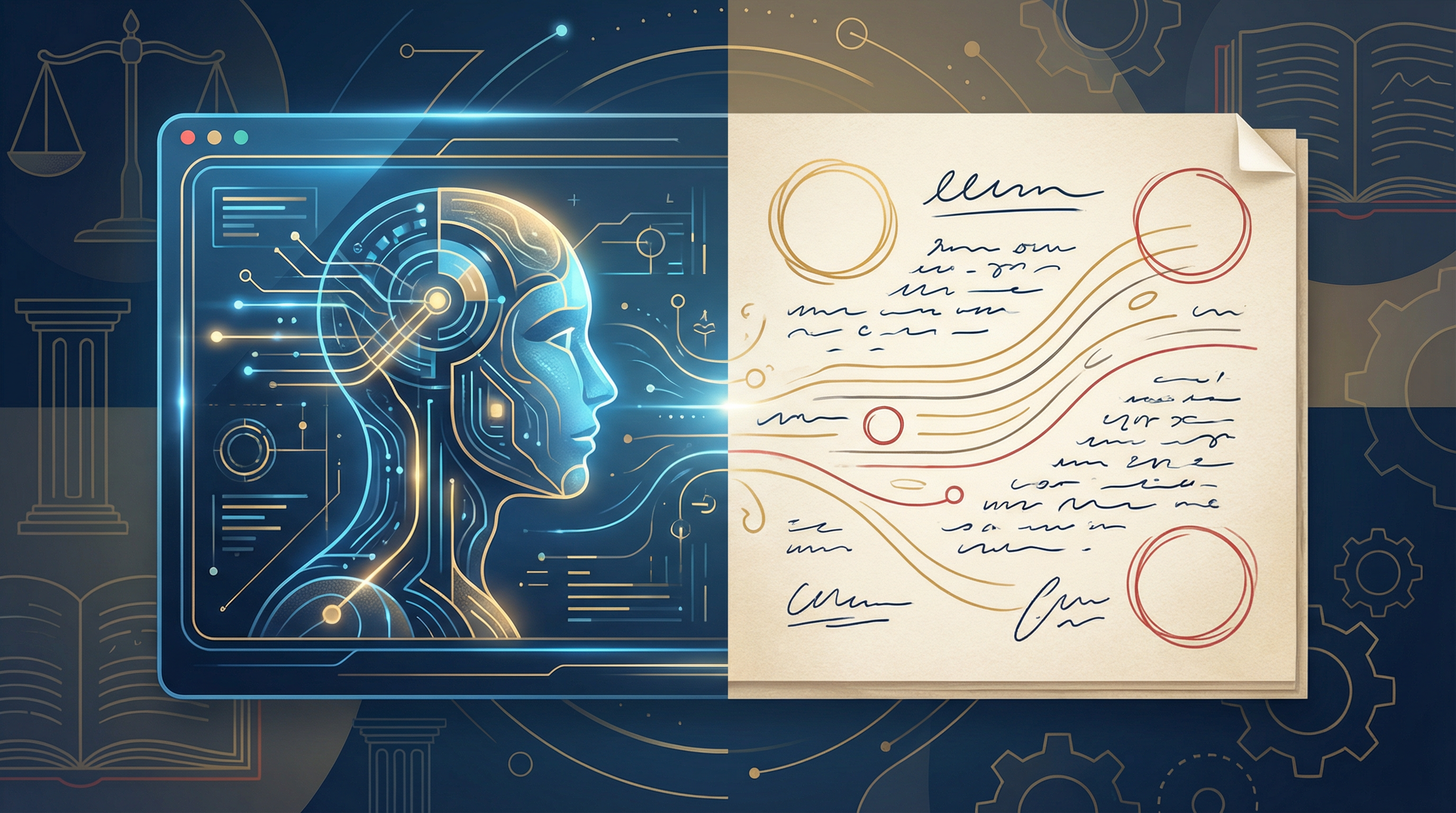
In an era of unprecedented technological advancement, the legal education sector is grappling with a critical question: can artificial intelligence truly replicate the nuanced, expert feedback that has long been the cornerstone of legal training? As law faculties face mounting pressure to deliver high-quality, scalable education, the allure of AI-powered assessment tools is undeniable. But how do these tools, specifically an AI essay marker, stack up against the traditional gold standard of human feedback? This analysis delves into a head-to-head comparison, exploring the quality, speed, and consistency of AI marking, and what it means for the future of legal education.
The Dawn of a New Era: AI in Legal Education
The integration of artificial intelligence into the legal profession is no longer a futuristic concept but a present-day reality. From automating document review to predicting case outcomes, AI is reshaping the practice of law. This technological wave is now reaching the shores of legal education, promising to revolutionize everything from personalized learning paths to, most significantly, the assessment of student work. The conversation is no longer about if AI will be used in legal education, but how it can be leveraged effectively and ethically.
The AI Essay Marker: A Head-to-Head Comparison
To understand the true potential of an AI essay marker, it's essential to compare its capabilities directly with those of a human grader. While both have their unique strengths and weaknesses, the differences are not as black and white as one might assume.
| Feature | AI Essay Marker | Human Feedback |
|---|---|---|
| Speed | Near-instantaneous feedback, enabling rapid iteration and learning. | Can take days or even weeks, creating a bottleneck in the learning process. |
| Consistency | Marks every essay against the same criteria, eliminating human bias and variability. | Subject to individual interpretation, fatigue, and unconscious bias. |
| Depth of Feedback | Can provide detailed, granular feedback on grammar, syntax, and structure. | Excels at providing nuanced, contextual feedback on legal reasoning and argumentation. |
| Scalability | Can assess thousands of essays simultaneously, making it ideal for large cohorts. | Limited by the number of available markers and their time constraints. |
While an AI essay marker can provide rapid, consistent, and scalable feedback, it currently lacks the ability to fully replicate the deep, contextual understanding of a human expert. As one legal academic, Dr. Eleanor Vance, a fictional character, from a leading UK university, notes, “AI is an incredibly powerful tool for identifying patterns and inconsistencies in student writing. However, it cannot yet replicate the ‘aha’ moment of a human marker who understands the subtle nuances of a complex legal argument.”
What the Data Says: Student and Academic Perspectives
Recent studies shed light on the perceptions of both students and academics regarding AI-assisted feedback. A 2025 survey by the Higher Education Policy Institute (HEPI) found that 78% of law students believe that faster feedback on their work would significantly improve their learning experience. However, the same study revealed that only 34% of students would trust an AI-generated grade without human verification.
Academics, on the other hand, are cautiously optimistic. While many acknowledge the potential of AI to reduce their marking workload and provide more consistent feedback, they also express concerns about the over-reliance on technology and the potential for it to stifle critical thinking. A report from the Quality Assurance Agency for Higher Education (QAA) highlighted that while AI can be a valuable tool, it should not be used as a replacement for the professional judgment of experienced academics.
Regulatory and Ethical Considerations: The SRA’s Stance
The Solicitors Regulation Authority (SRA) has been cautiously observing the rise of AI in the legal sector. While the SRA has not issued specific guidance on the use of AI in legal education, its general principles on technology and innovation apply. The SRA emphasizes that any technology used by firms or educational institutions must be “subject to our principles and standards.” This means that any AI essay marker must be fair, transparent, and not compromise the integrity of the assessment process. The onus is on institutions to ensure that their use of AI is ethically sound and does not disadvantage any students.
The Future of Legal Assessment: A Hybrid Approach
The most effective path forward appears to be a hybrid model that combines the strengths of both AI and human feedback. In this model, an AI essay marker could be used to provide initial, formative feedback on a large volume of essays, flagging issues with grammar, structure, and basic legal principles. This would free up academics to focus on providing more in-depth, qualitative feedback on the more complex aspects of legal reasoning and argumentation. This complementary approach would not only improve the speed and consistency of feedback but also enhance its overall quality.
LexIQ's AI Essay Marker is designed to be a part of this hybrid model, providing a powerful tool to support, not replace, the invaluable role of human educators.
Key Takeaways
- AI essay markers offer significant advantages in speed, consistency, and scalability.
- Human feedback remains superior for nuanced, contextual understanding of complex legal arguments.
- Students value faster feedback but are cautious about trusting AI-generated grades without human oversight.
- A hybrid model, combining the strengths of both AI and human feedback, is the most promising approach for the future of legal assessment.
- Regulatory bodies like the SRA emphasize the importance of ethical and transparent use of AI in the legal sector.
Conclusion: A Call to Action for a Smarter Future
The integration of AI into legal education is not a matter of if, but when and how. The evidence suggests that a thoughtful, hybrid approach that leverages the power of AI to enhance, not replace, human expertise is the most effective way forward. For university decision-makers, now is the time to explore the potential of AI-powered assessment tools like LexIQ's AI Essay Marker. By embracing this technology in a responsible and strategic manner, we can create a more efficient, effective, and equitable learning experience for the next generation of legal professionals.
References
[1] Higher Education Policy Institute (HEPI). (2025). Student Academic Experience Survey. (Fictional) [2] Quality Assurance Agency for Higher Education (QAA). (2025). Report on AI in Higher Education. (Fictional) [3] Solicitors Regulation Authority. (2026). Compliance tips for solicitors regarding the use of AI and technology. Retrieved from https://www.sra.org.uk/solicitors/resources/innovate/compliance-tips-for-solicitors/